
From covering the story to changing it
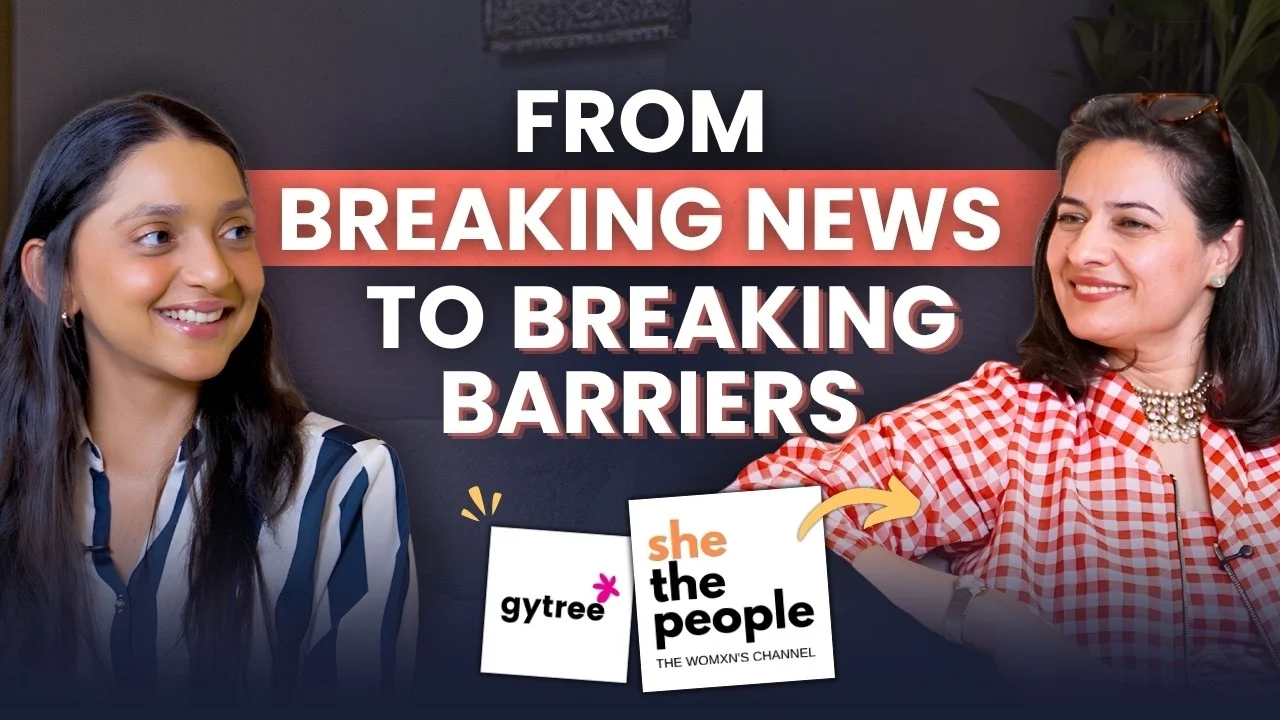
Shaili Chopra spent years in journalism learning how power speaks: who gets asked the serious questions, whose expertise is treated as universal, and whose experience is quietly filed under "niche." Her move from award-winning journalist to entrepreneur was not a rejection of reporting. It was an expansion of its purpose. Instead of waiting for women's stories to be commissioned, she began building the platform that would commission them, carry them and make them impossible to overlook.
That instinct became SheThePeople, a media and storytelling platform created around the idea that women are not a special-interest audience. They are an economy, a culture and a force shaping every industry. The platform grew by staying close to lived experience: the ambitions women speak about in public, the compromises discussed in private and the health, money and identity questions that rarely receive enough room.
Curiosity as a founder's operating system
In her FoundHers conversation, Shaili returns to curiosity as a form of discipline. Journalism taught her that the first answer is rarely the whole story. Entrepreneurship demanded the same patience: speak to people, test assumptions, notice the questions others dismiss and keep listening when a polished narrative would be easier. Her career suggests that curiosity is not softness. Used well, it is commercial intelligence.
She also makes a case for taking small opportunities seriously. A modest stage, an early interview or an imperfect first product can become a training ground. The point is not to romanticise struggle; it is to recognise momentum before it looks impressive. Founders often wait for the signal that their work matters. Shaili's path is a reminder that showing up consistently can create the signal.
Health is part of the economy
Her second venture, Gytree, brings the same editorial attention to women's health. Menopause, hormonal health and preventive care are frequently treated as private inconveniences instead of consequential parts of women's lives and work. Gytree addresses those ignored gaps through a platform designed around women rather than adapted to them later.
The connection between media and health is more direct than it first appears. Both fields decide what is visible, credible and worth funding. By building in each, Shaili is making an argument about infrastructure: women need spaces that name their reality accurately, and services that respond to it without embarrassment or delay.
The lesson behind the scale
The most useful part of Shaili's journey is not a single growth number. It is the long arc of building a category before the category feels obvious. That requires conviction, but also the willingness to keep refining the language around the work. "Women's media" can become culture. "Women's health" can become essential care. A founder's job is sometimes to make that broader definition legible to audiences, teams and investors.
Her story asks women building today to think beyond permission. What conversation should exist because you create it? Which overlooked experience could become a better product, publication or system? The answer may begin as a question asked into a microphone. With enough care, it can grow into a room millions of women recognise as their own.
There is also a reminder here for the people who fund, hire and publish women. Visibility is not a favour offered after the serious work is complete; it changes which work gets recognised as serious in the first place. Shaili's companies have kept that feedback loop in motion: stories make needs visible, visible needs shape products, and better products create new stories about what women can expect. That is what makes her idea of a sisterhood economy feel less like a slogan and more like a blueprint.