
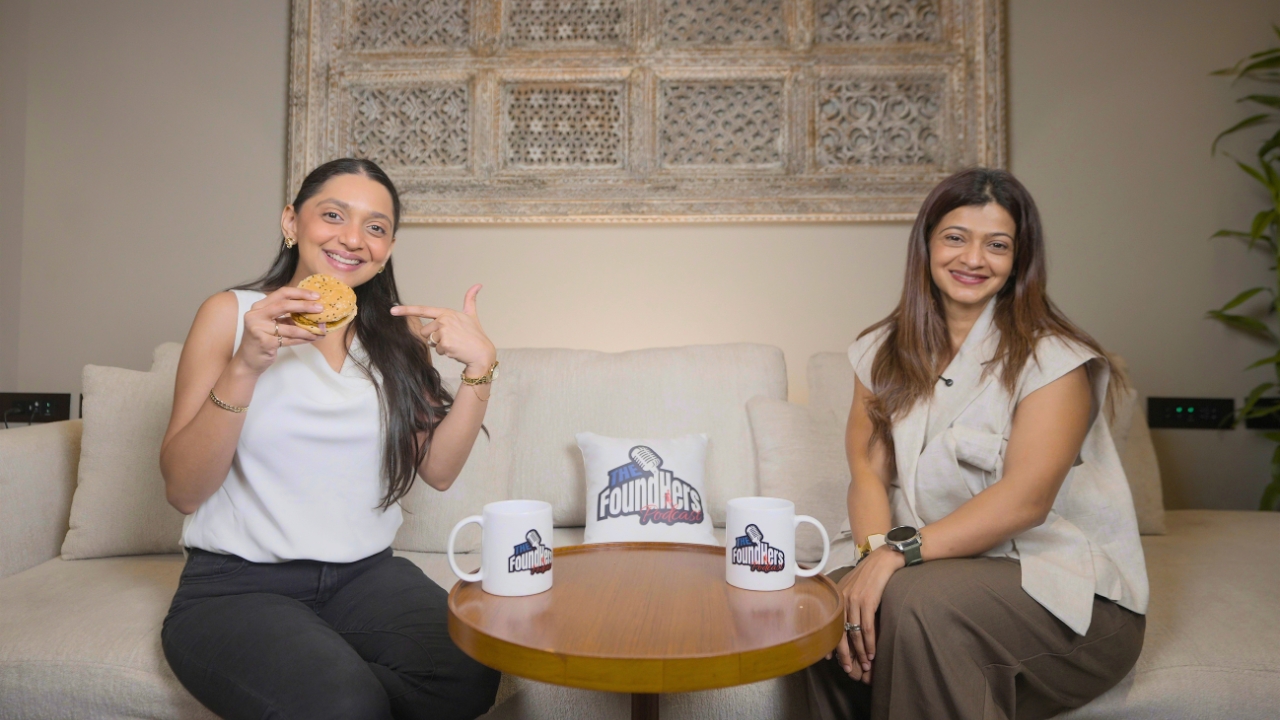
Burger King had 0 restaurants in India in 2014. The Whopper hadn’t been served here even once. Cicily joined that year as one of Burger King‘s first employees in the country, straight out of a very different world: luxury fashion, at Reliance Brands. By the time she moved on in 2025, Burger King India had grown to roughly 500 stores. On this episode of The FoundHers Podcast, she breaks down exactly what filled that 11-year gap, and why so few people know a woman built it.
Who Is Cicily Thomas
Cicily spent 12 years at Burger King India, starting in 2014 as one of the first employees and eventually rose to Brand President, overseeing operations and business development. According to the company’s own investor filings, Burger King crossed 400 stores in India by 2023 and reached over 500 by 2025, with a target of 700 by the end of 2026. In 2025, Cicily moved on to Everstone Group, the investment firm that also holds Subway’s master franchise in India, to build another global food brand’s India entry from the ground up, the same role she once took on for Burger King.
The Rivalry Every Indian Has An Opinion On
Burger King versus McDonald’s isn’t an India-specific rivalry, it’s a global one. The Indian version came with a unique handicap, though: McDonald’s arrived in 1996, nearly two decades before Burger King, and spent that head start teaching an entire generation what a burger even was. That gap turned into a language problem. Customers walked into a Burger King and asked for “aloo tikki,” the name McDonald’s had made synonymous with a vegetarian patty, regardless of which brand actually made it.
Cicily and her team couldn’t compete on discounts the way an established player could afford to. Instead, they built a campaign around a different idea: “pet bharega, niyat nahi,” roughly, you’ll eat because it’s genuinely good, not because it’s cheap. Rather than cutting prices, they repositioned the burger itself. It went from a snack Indians treated as a pre-dinner extra to an actual meal, sold with fries and a drink. It’s a useful case study for any challenger brand entering a category an incumbent already owns: compete on value delivered, not on price cut.
Localising A Global Brand For India
Burger King’s global operating model runs on a single kitchen everywhere in the world, except India. Here, the brand had to build 2 kitchens from scratch, one for vegetarian food and one for non-vegetarian, down to separate fryers, utensils, and staff. It took roughly 2 years to rewrite Burger King’s entire global operations manual around that one requirement.
The bigger surprise came with the Whopper itself. Burger King launched its standard global build in India, ketchup included. New customers pushed back hard. It wasn’t about taste. In India, ketchup is a condiment a diner chooses to add, not a sauce a brand adds for them. It took 2 more years to rebuild the burger’s flavour profile around that single cultural insight, a localisation lesson that now shows up in how visiting international colleagues describe preferring the Indian menu over the original.
The Drive-Thru Insight That Saved Punjab
Metro city expansion, Cicily explains, was the easy part: malls and high streets in Mumbai and Delhi followed a predictable playbook. Tier 2 and tier 3 cities didn’t. 2 early stores in Punjab performed poorly enough that the team nearly wrote the state off as premature for the brand, until Cicily personally walked the streets and noticed that every successful McDonald’s nearby had one thing Burger King didn’t: a drive-thru. Once Burger King added them, Punjab became one of its strongest markets in the country. The same store format that worked in a Mumbai mall simply didn’t translate to a state where driving through was the local habit, a reminder that scaling across India rarely means replicating one city’s playbook in the next.
Building The Delivery Ecosystem Before Swiggy And Zomato Existed
When Burger King launched in India in 2014, neither Swiggy nor Zomato existed as delivery platforms yet. Swiggy was still called Bundl, a 3-person startup that had just launched in Bangalore, and Burger King became its first restaurant partner. Zomato, at the time, only listed menus, it had no delivery infrastructure at all, until Burger King pushed the company to build real order-fulfilment technology instead of relying on phone calls.
That early relationship gave Cicily a firsthand, and fairly blunt, view on cloud kitchens today: in her assessment, most don’t work as standalone businesses, because delivery commissions consume the margin that would otherwise fund brand building. A restaurant nobody can walk into, she argues, struggles to build the kind of recognition that keeps customers loyal once they have other options.
The Business Of Seconds
Running a QSR chain, Cicily says, is closer to a science than a business. Every layout decision, from where the fryer sits to how many order tills a store has, is designed around removing seconds from an order. One story sums it up: for 10 years, Burger King’s in-store toasters were positioned in a way that made shorter staff members reach up on their toes, adding a few extra seconds to every bun toasted. Once someone finally noticed and repositioned it, the fix shaved 4 seconds off each order, multiplied across hundreds of stores and millions of orders a year.
Where Are The Women Leading India’s Biggest Brands
Cicily’s story raises a question worth sitting with: how many women actually run companies of this scale in India? According to government data presented in India’s Parliament by the Ministry of Corporate Affairs, just 9 of India’s top 500 listed companies currently have a woman CEO. Cicily spent over a decade running the operations and business development of a brand present in hundreds of Indian cities, work that rarely gets attached to a name, let alone a face. Her story is a reminder that the number of women actually building India’s most visible brands is almost certainly higher than the number who get publicly credited for it.
Watch the full episode of The FoundHers Podcast with Cicily here.
For more real, unfiltered conversations with women building businesses on their own terms, follow @thefoundhers_ on Instagram.
Frequently Asked Questions
How did Burger King enter the Indian fast food market?
Burger King entered India in 2014, opening its first restaurant in Delhi. It launched as a challenger brand in a market McDonald’s had already dominated for nearly two decades, requiring Burger King to build separate vegetarian and non-vegetarian kitchens and localise its menu significantly for Indian tastes.
Why does McDonald’s remain more strongly associated with burgers in India than Burger King?
McDonald‘s entered India in 1996 and effectively introduced the country to the burger format itself, building brand nostalgia tied to childhood memories over multiple decades. That head start meant customers even referred to vegetarian patties generically as “aloo tikki,” a term Burger King had to work around rather than fight directly.
How did Cicily grow Burger King India from its first store to roughly 500 locations?
Cicily was one of the first employees at Burger King in India in 2014 and spent 12 years scaling the brand, moving from operations into the role of Brand President. Her approach combined localised store formats (including drive-thrus in states like Punjab), a menu rebuilt around Indian taste preferences, and an early, hands-on partnership with delivery platforms like Swiggy and Zomato before they became household names.
What challenges did Burger King face while localising its menu for India?
Burger King had to build 2 entirely separate kitchens for vegetarian and non-vegetarian food, a requirement it had never needed anywhere else globally. It also had to rework its signature Whopper’s flavour profile after Indian customers rejected the standard global build, particularly its use of ketchup as a default sauce rather than an optional condiment.
How many women lead major companies in India?
According to government data presented in India’s Parliament by the Ministry of Corporate Affairs, only 9 of India’s top 500 listed companies by turnover currently have a woman serving as CEO, alongside 25 women managing directors, out of 860 women holding director or board positions across those companies overall.