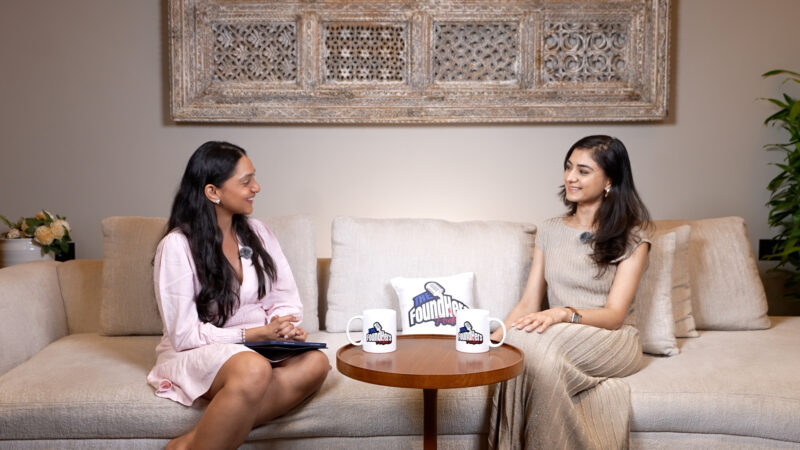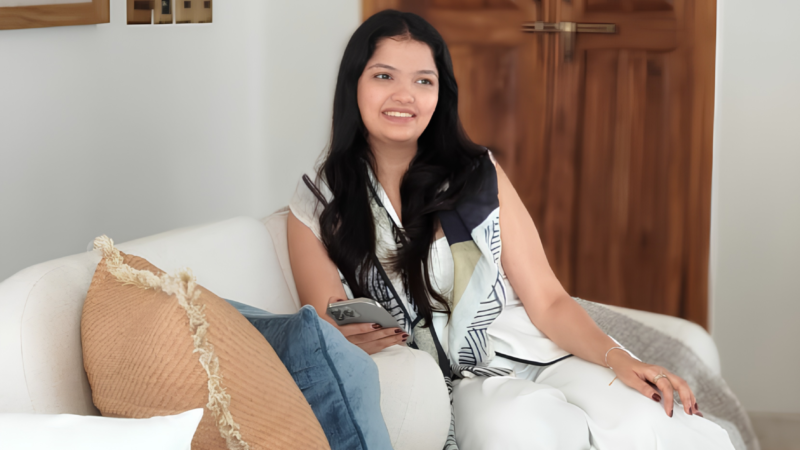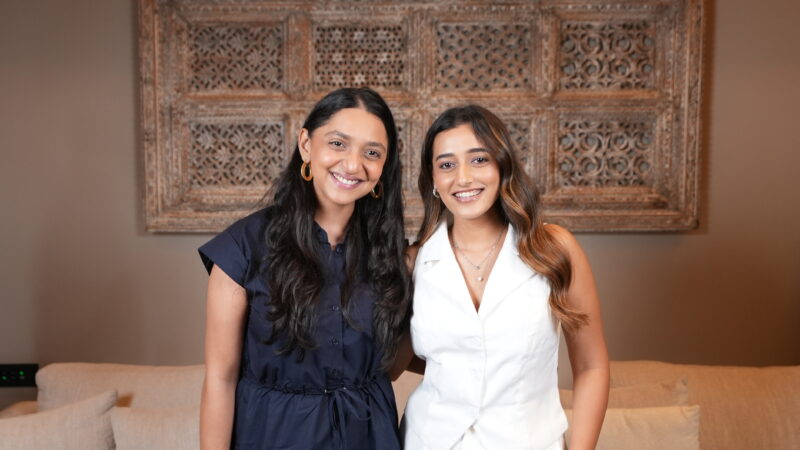
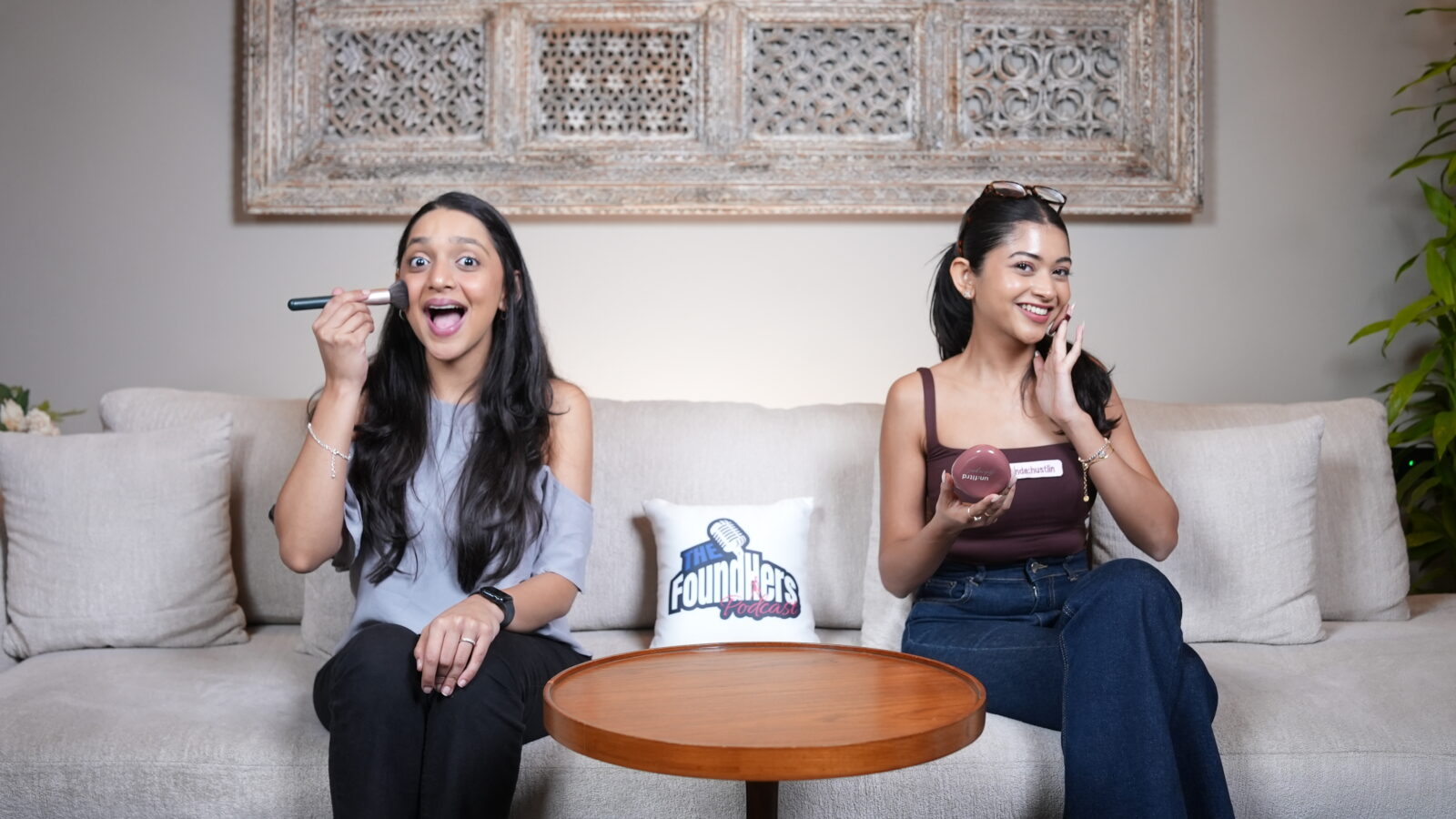

Ghazal posted an Instagram story in 2024 about not being able to find her own foundation shade. It got more replies than any polished photo she’d ever posted, in a feed she’d already spent 2 years building to roughly 85,000 followers as a beauty content creator. That single data point became un:fltrd, the brand behind a cushion foundation built specifically around a problem India’s beauty market had never really solved: finding a shade that actually matches Indian skin, in a colour cosmetics market reportedly worth $1.8 billion in India alone. On this episode of The FoundHers Podcast, a platform where women talk honestly about building businesses, Ghazal walks through how she built it, and where it nearly fell apart.
Who Is Ghazal
Ghazal is the founder and CEO of un:fltrd, a base makeup brand built for Indian skin tones. Before building the brand, she spent 2 years as a content creator, building an audience of around 85,000 people, mostly women, though she describes that content as always being a distribution channel rather than a career in itself. un:fltrd’s debut product, the Almost Ready Cushion Foundation, launched after Ghazal hosted what FashionUnited India described as India’s first large-scale shade-matching workshop, bringing together over 150 women in Mumbai to test more than 50 foundation shades and 6 colour correctors before the formula was finalised, an event that had expected 50 to 75 attendees and drew more than double that, some travelling in from other cities.
The Instagram Story That Started A Brand
Ghazal wasn’t planning to build a beauty brand when she posted about her own shade-matching struggle. The response told her something the beauty industry had missed: plenty of brands were building in colour cosmetics and skincare, but almost nobody in India had seriously tackled base makeup, the category built around getting a foundation shade right.
Her read on why that gap existed: base makeup is genuinely harder to manufacture and riskier to get wrong than lipstick or blush, and it’s also the category with the highest retention. Once someone finds a foundation that works, they rarely switch. When Ghazal asked her own community which foundation brands they trusted, the answers were international names like Maybelline. No Indian brand came up at all.
That gap isn’t just anecdotal. FashionUnited India reported that a 2024 Mintel study found only 12% of Indian consumers feel available foundations actually match their skin, since most brands still build shade ranges off global charts rather than Indian undertones. As she put it to FashionUnited India, her goal was to launch with “truth, mine and theirs,” not a guess.
Ghazal also made a deliberate choice most Indian beauty brands don’t: no celebrity face, no paid ambassador. Coverage of the launch has repeatedly framed this as intentional, building the brand through community-led formulation rather than a familiar face and a campaign shoot. That lines up with a broader shift the same FashionUnited report points to, a 2025 Kantar study finding that Gen Z consumers in India favour brands that feel collaborative and transparent over ones fronted by a celebrity.
Bootstrapped, Not Funded: The Numbers Behind un:fltrd
un:fltrd didn’t raise a funding round to get here. Ghazal bootstrapped the brand with roughly ₹1 crore of her own capital, and according to reporting on the brand’s first year, crossed ₹1 crore in revenue within roughly a year of launch, inside a colour cosmetics category in India estimated at $1.8 billion. Before a single product existed, over 1,000 people had already been surveyed about their shade-matching frustrations, on top of the 150-person workshop that shaped the actual formula.
That sequencing, community and data before product, is unusual enough in beauty that it’s become the throughline in how other outlets describe un:fltrd. It’s not a brand that built an audience to sell to. It’s one where, as Ghazal put it, “my online community is actually our brand’s co-creators.”
Solving Shade-Matching With A Refundable Cushion Foundation Kit
Buying foundation online means trusting a screen to tell you something a screen genuinely struggles to show: your exact shade under real lighting. Ghazal’s fix was a findyourmatch trial kit, essentially a foundation shade finder you can test at home rather than guess from a photo, sorted into 4 broad brackets (lighter, light-to-medium, medium-to-deep, and deep), each containing 3 shades to test for ₹349.
If you find your match and upgrade to the full-size foundation, that ₹349 comes back to you in full. It’s a far more reliable way to choose a foundation shade than scrolling through swatch photos shot in someone else’s lighting.
It’s a customer acquisition cost dressed up as a product, not a separate profit line, and Ghazal is upfront that minis rarely make sense financially on their own, since production costs don’t drop in line with a smaller size. What made the bet pay off was demand nobody fully predicted: un:fltrd sold through 6 months of planned inventory in 2 months, well ahead of the roughly 25 to 30% conversion rate Ghazal considers standard for this kind of sampling model.
The Audience Nobody Expected: Moms
Ghazal built un:fltrd assuming her core audience would be Gen Z and millennial women. Offline workshops and Meta ad testing told a different story. Older women responded to the cushion format with genuine nostalgia, since it echoes the compact powder they grew up using, but without settling into fine lines the way a powder does on more mature skin. When Ghazal’s team tested ads aimed at an older demographic, conversion came in well above what they’d seen targeting a younger one.
What It Took To Find A Manufacturer
Cushion foundation wasn’t a format many Indian manufacturers had experience producing, and Ghazal’s low minimum order quantities gave most of them little reason to take the risk on an unproven brand. She’s direct that being a woman in her early 20s made the search harder than it would have been otherwise, describing rooms full of older male manufacturers who simply didn’t take her seriously at first. Finding the right manufacturing partner meant finding someone willing to bet on the vision before there was any track record to point to.
Part of what shaped that vision came from attending international beauty expos, including Cosmoprof, one of the industry’s largest trade shows, held annually in Mumbai each December alongside editions in Korea, China, Hong Kong, and Bologna. Ghazal found out about her first one through an unsolicited promotional email, and her advice for any founder curious about the same route is straightforward: search for the beauty expos happening that year, and register.
The Packaging Mistake That Nearly Sank The Launch
Ghazal’s costliest mistake had nothing to do with the formula. After importing an entire bulk shipment of packaging, thousands of units, stability testing revealed the packaging wasn’t properly airtight, and the foundation formula had started drying up inside it before it ever reached a customer. The full shipment had to be sent back, fitted with an additional airtight layer, and reimported. It was an expensive delay, and Ghazal says it could have been avoided entirely by waiting a few more weeks to properly test the packaging before committing to a full production run.
Why Olive Skin Has Been Left Out Of Beauty For Years
One insight from Ghazal’s community stood out to her more than any other: a large share of Indian skin carries an olive quality that most people have never had named for them, since foundation shade systems are typically built around warm, cool, and neutral skin undertones alone.
Olive skin tones sit outside that standard framework entirely, a gap that’s well documented in skin tone research going back to the Fitzpatrick scale, dermatology’s standard system for classifying skin’s response to UV exposure, which recognises olive as its own distinct classification. It’s a big part of why finding the best foundation for Indian skin has historically meant compromising, since most global shade ranges were never built with olive undertones in mind to begin with.
Ghazal connects the years of neglect around olive skin to a longer history of colourism in Indian beauty, one shaped for decades by products like Hindustan Unilever’s Fair & Lovely, renamed Glow & Lovely in 2020, which conditioned generations of Indian consumers to treat lighter skin as the default standard of beauty. Rather than simply correcting the shade range, un:fltrd built its branding around reframing olive tones positively. Its marketing leans on martini glass imagery throughout, on the logic that olives, in that context, are associated with something fun rather than something to fix.
Her Playbook
A few things from Ghazal’s story that hold up outside beauty entirely:
- Build your community before you build your product, and let them tell you what to make.
- Being underestimated by people who assume they know better isn’t a reason to lower your own standard.
- A refundable trial isn’t a discount. It’s trust-building, disguised as a transaction.
- Move fast, but don’t skip the testing your gut is telling you to do. It’s cheaper to wait a few weeks than to redo everything later.
Watch the full episode of The FoundHers Podcast with Ghazal here.
For more real, unfiltered conversations with women building businesses on their own terms, follow @thefoundhers_ on Instagram.
Frequently Asked Questions
1. What is un:fltrd and who founded it?
un:fltrd is an Indian base makeup brand founded by Ghazal, built specifically around foundation shade-matching for Indian skin tones. Its debut product, the Almost Ready Cushion Foundation, was developed with direct input from a large-scale community shade-matching workshop rather than a standard industry shade chart.
2. How to choose a foundation shade without trying it in store first?
The most reliable way is to test a few close shades against your skin in daylight rather than relying on a product photo, since screens and studio lighting distort colour. un:fltrd built its findyourmatch kit specifically around this problem, letting customers test 3 real shades at home for ₹349 before committing to a full-size foundation.
3. How does un:fltrd’s shade-matching kit work?
The findyourmatch trial kit is sorted into 4 shade brackets, each containing 3 shades to test at home for ₹349. If a customer finds their match and upgrades to the full-size foundation, the ₹349 is fully refunded, making the kit a customer acquisition tool rather than a standalone profit product.
4. What is olive skin tone, and why is it hard to shade-match?
Olive skin carries a muted green, golden, or grey undertone that falls outside the standard warm, cool, and neutral categories most foundation shade ranges are built around. This classification has long been recognised in dermatology through systems like the Fitzpatrick scale, yet many mainstream beauty brands still don’t formulate shades specifically for it, leaving a large number of consumers, including many Indians, without an accurate match.
5. Why did Ghazal build a refundable trial kit instead of just launching a full-size product?
Ghazal built the kit because online shoppers can’t reliably judge their foundation shade from a screen, and many had already been burned by past mismatched purchases. Making the ₹349 kit fully refundable against a full-size purchase removed the financial risk of trying a new, unproven Indian brand in a category where trust is difficult to build online.
6. What challenges do young women founders face when working with manufacturers in India?
According to Ghazal, being a young woman founder made it harder to be taken seriously by manufacturers, many of whom were reluctant to take on the risk of a small, unproven order from a founder without an established track record. She has said the process would likely have moved faster had she been a man of the same age, given manufacturing partners in the space are predominantly male.
7. How did Ghazal build un:fltrd’s audience before the brand even launched?
Ghazal spent 2 years as a content creator, building an audience of roughly 85,000 people before un:fltrd existed as a brand. She surveyed over 1,000 followers about their foundation shade-matching frustrations, then hosted an in-person workshop with over 150 women to directly shape the formula of her debut product before it went into production.
8. Does un:fltrd use celebrity endorsements?
No. un:fltrd was deliberately built without a celebrity face or paid brand ambassador, relying instead on community-led product development. Reporting on the brand has tied this to a broader shift among Gen Z consumers in India, who research suggests increasingly favour brands that feel collaborative and transparent over ones fronted by a celebrity.