


Aakriti built Gubb into a beauty tools brand worth over ₹100 crore, and quick commerce was a big part of how she got there. On this episode of The FoundHers Podcast, a show where women talk honestly about building businesses, she breaks down that growth, and busts a few SPF myths along the way. There’s also a part of her story most people don’t know, and it has nothing to do with beauty.
Who Is Aakriti
Aakriti studied finance and data science at NYU Stern School of Business, then started her career as an investment banking analyst on Wall Street, including a stint at PJT Partners. She resigned from that job in New York to move back to India and build something of her own. Today she runs two consumer brands: Gubb, a beauty tools and accessories brand now valued at over ₹100 crore, and Happier, an SPF-focused sunscreen brand. Happier has expanded into the UAE and Saudi Arabia and introduced braille-friendly packaging for visually impaired customers, a detail The Glitz Media featured her for directly.
Before Gubb: The Sanitary Pad Brand Few People Know About
Before either of her current brands existed, Aakriti founded Pankh, a feminine hygiene venture based in her hometown of Parwanoo, Himachal Pradesh. As a young girl, she noticed local women and girls relying on old cloth and rags, since safe, affordable sanitary products weren’t available. The gap was serious enough that some girls her age were dropping out of school once they started menstruating. Pankh was her attempt to manufacture affordable, safe sanitary napkins for the region.
It’s a striking origin point for someone now running a beauty empire, and it’s rarely mentioned alongside her current work. But it explains something about how she operates. From Pankh, to Happier’s braille packaging, to Gubb’s obsession with an overlooked product category, Aakriti’s pattern is building for the gap nobody else bothered to notice, not chasing the most obvious opportunity in the room.
The Everyday Items Nobody Bothered To Rebrand
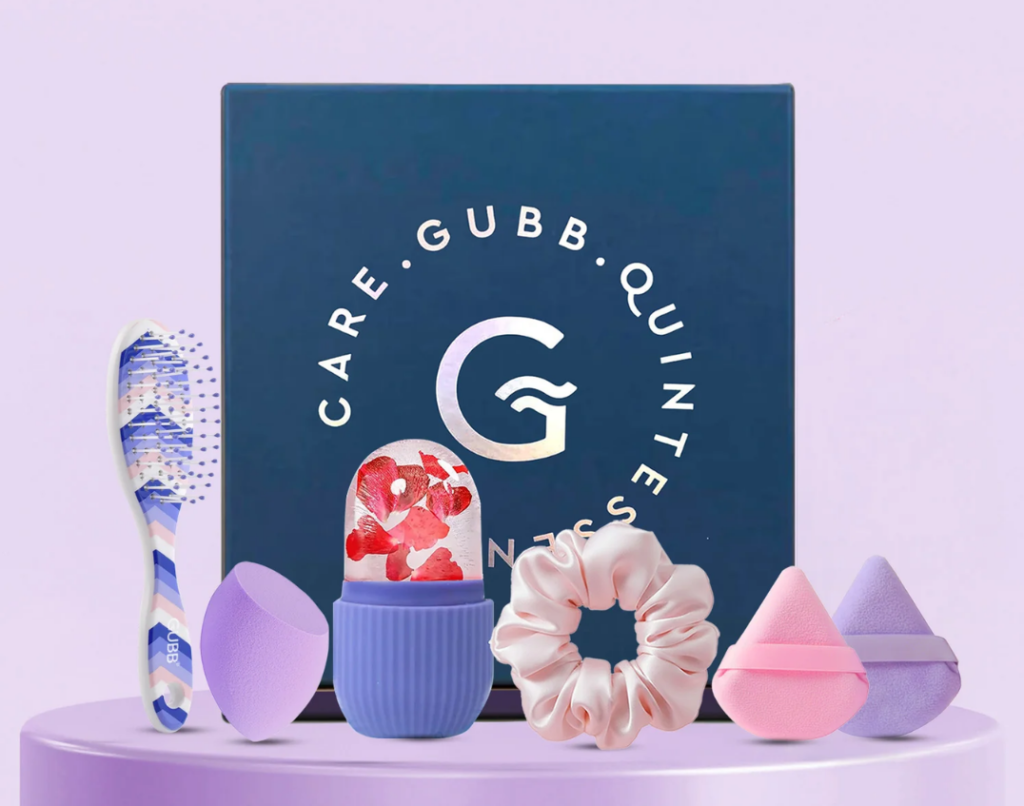
Aakriti’s read on beauty tools and accessories is blunt: it’s one of the most unorganised, overlooked categories in the entire industry. Skincare, makeup, and haircare get all the attention. Hairbrushes, ice rollers, gua shas (or face rollers, depending on who you ask), and other basic makeup tools historically came from an unbranded kirana store shelf, with no consistency in quality from one purchase to the next.
Gubb’s bet was to treat that neglect as an opening. The products stayed affordable, but everything else, colour, packaging, the actual experience of buying and using something as mundane as a hairbrush, got redesigned around a younger audience once Aakriti moved the brand online roughly 5 years ago. Her phrase for it: beauty has plenty of competition in the “software,” skincare formulas and active ingredients, but almost nobody was investing in the “hardware.”
Why Aakriti Shrank Her Product List To Grow Faster
The instinct when a brand starts growing fast is usually to launch more. Aakriti did the opposite. Once Gubb hit its exponential growth phase, she started actively phasing out long-tail products rather than adding to the catalogue.
Her reasoning: width might look impressive on a shelf, but depth is what actually builds brand identity. A handful of products people return to repeatedly, in Gubb’s case, a small set of core items including its best-selling blue vented hairbrush, does more for a brand than a constant stream of short-lived launches chasing whatever trend is current. The decision to pivot at all, she says, rarely comes from instinct alone, since founders are naturally biased toward believing their own products are already right. It came instead from direct consumer feedback, reviews, Instagram DMs, and pop-up events, telling her plainly what people actually wanted.
Getting Onto Quick Commerce Before It Got Crowded
Gubb was among the earlier beauty brands to list on quick commerce platforms, back when neither Gubb nor the platforms themselves knew how large the category would become for non-grocery items. Aakriti’s team initially listed slower-moving stock there, since nobody expected beauty tools to perform well on an app built for 10-minute grocery delivery. Once it worked, they went all in, and the timing advantage compounded.
That window has closed. Platforms are now selective about how many brands they allow per category, and getting listed today depends far more on warm introductions from founders already selling on Zepto or Blinkit, or direct outreach to category leads. Aakriti is also clear that a listing alone guarantees nothing anymore. Quick commerce isn’t a discovery platform the way Nykaa can be. Someone opening Zepto or Blinkit is there for 2 to 3 minutes to buy something they already have in mind, which means a brand needs real recognition built elsewhere before quick commerce can convert it into a sale.
What Actually Wins On Amazon
Amazon’s Choice badge and search ranking, in Aakriti’s experience, are driven overwhelmingly by organic traffic and conversion rate rather than ad spend. She’s firm on one point: she won’t buy reviews, and considers a handful of genuine, detailed reviews far more persuasive to a shopper than a large volume of generic ones. One detail that stood out on the episode: Aakriti says competitors have paid to leave negative reviews on Gubb’s own listings, a tactic she calls genuinely eye-opening the first time she encountered it.
Staying Profitable On Razor-Thin Margins
Quick commerce and e-commerce platforms typically take 30 to 40% in channel margin, according to Aakriti, which is enough to sink a consumer brand that isn’t disciplined elsewhere. Her framing: treat that margin as a distribution cost, not a loss, since it buys visibility to millions of potential customers without the direct customer acquisition spend a D2C-only brand would otherwise carry.
The trade-off shows up industry-wide. Kearney research cited by India Brand Equity Foundation, a trade promotion body under India’s Ministry of Commerce, found that quick commerce generates roughly 62 to 64 jobs for every ₹100 crore of monthly transaction volume. That’s a labour intensity comparable to traditional general trade, and well above standard e-commerce. Aakriti’s advice for surviving inside that structure is plain but specific: keep fixed costs and team size lean, stay disciplined on marketing spend, and treat every other line on the P&L with the same scrutiny.
The SPF Myths Worth Actually Knowing
This is the part of the episode with the widest use outside business circles, and the one that answers what most people are actually looking for when they search for the best sunscreen. In the SPF 30 vs 50 vs 100 debate, Aakriti is direct: nobody needs SPF 70 or SPF 100. SPF 50, or even SPF 30, is enough for daily use, and higher numbers mostly function as marketing. That claim holds up against dermatological guidance. The American Academy of Dermatology recommends SPF 30 or higher as its standard guidance, noting that higher-number SPFs block only slightly more UVB radiation while offering no extra protection time between reapplications.
Aakriti also pushes back on a common assumption in India, that sunscreen exists mainly to prevent tanning before a beach holiday. Its actual job is protecting skin, the body’s largest organ, from UV damage that drives premature ageing, hyperpigmentation, and dark spots, which makes it a daily habit rather than a seasonal one. Reapplication every 2 to 3 hours matters if you’re in direct sun, less so if you’re indoors and away from windows all day. On drinkable sunscreen, her position is straightforward scepticism: she’ll wait for real clinical evidence before trusting anything beyond a topical product.
Her Playbook
A few things from Aakriti’s story that hold up outside beauty entirely:
- Take something everyday and ordinary, and give it a makeover. That alone can be enough to help you stand out.
- Cutting products when you’re growing fast feels backwards, but depth builds a brand faster than width does.
- Don’t let a platform’s badge system become your whole strategy. Organic trust still outperforms it.
Watch the full episode of The FoundHers Podcast with Aakriti here.
For more real, unfiltered conversations with women building businesses on their own terms, follow @thefoundhers_ on Instagram.
Frequently Asked Questions
1. What is Gubb and who founded it?
Gubb is an Indian beauty tools and accessories brand, founded by Aakriti, now valued at over ₹100 crore. It sells hairbrushes, ice rollers, gua shas, and grooming tools through its own website, major e-commerce platforms, and quick commerce apps like Zepto and Blinkit.
2. What did Aakriti do before starting Gubb and Happier?
Before building her beauty brands, Aakriti worked as an investment banking analyst on Wall Street after studying finance and data science at NYU Stern School of Business. Earlier still, as a young girl in Parwanoo, Himachal Pradesh, she founded Pankh, a venture manufacturing affordable sanitary napkins to address a lack of safe menstrual hygiene products in her hometown.
3. Do you actually need SPF 100 sunscreen?
No. Dermatologists generally consider SPF 30 to 50 sufficient for daily use, since higher SPF numbers provide only marginally more UVB protection while offering no additional wear time between reapplications. The American Academy of Dermatology recommends SPF 30 or higher as its standard guidance.
4. How does a brand get listed on quick commerce platforms like Zepto or Blinkit?
Getting listed today typically requires a warm introduction from a founder already selling on the platform, or direct outreach to a category lead. According to Gubb founder Aakriti, simply being listed no longer guarantees growth, since quick commerce functions as a purchase channel rather than a discovery platform, meaning brands need existing recognition to convert impulse-driven, time-limited app sessions into sales.
5. How important are paid reviews or paid ads for winning on Amazon?
According to Aakriti, Amazon’s search ranking and Amazon’s Choice badge are driven primarily by organic traffic and conversion rate rather than advertising spend. She avoids paid reviews entirely, arguing that a smaller number of genuine, detailed reviews builds more trust with shoppers than a larger volume of generic ones.