

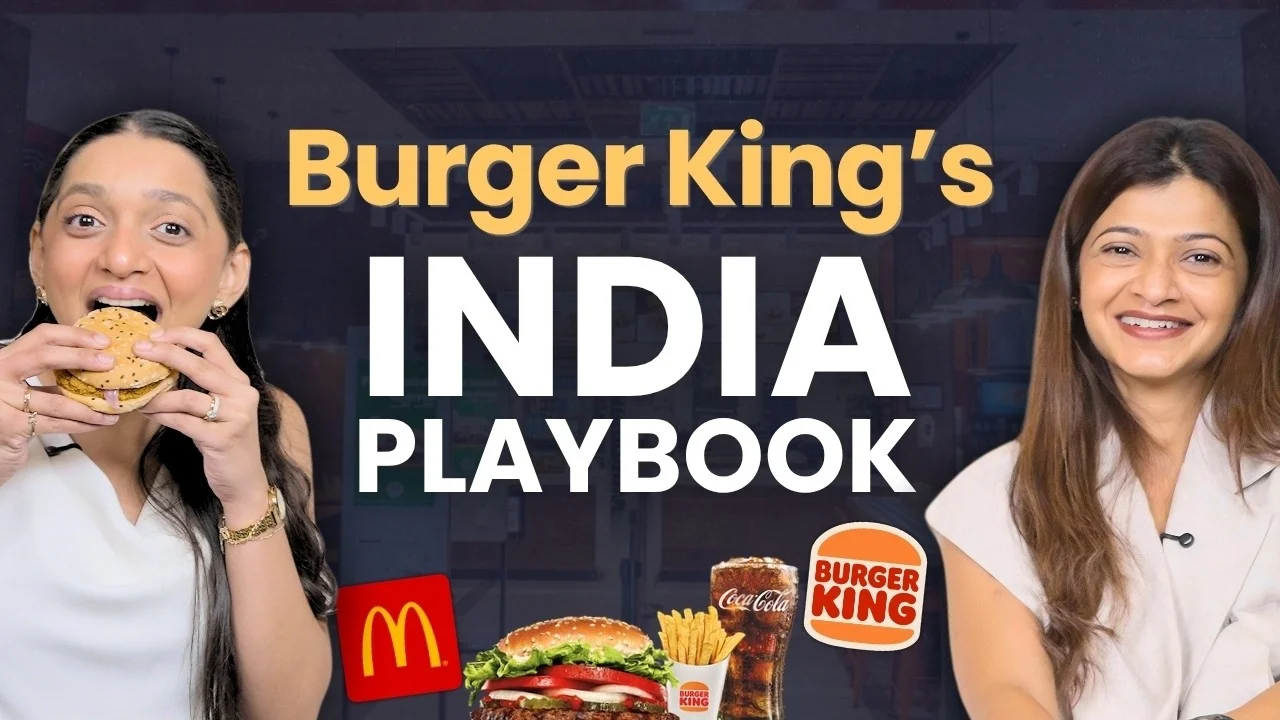
The first employee view
Before Burger King India was a network of hundreds of restaurants, it was a market-entry question. Cicily Thomas joined as the company's first employee and eventually became its President, giving her an unusually complete view of how a global brand becomes locally relevant. She saw the early choices, the operating discipline and the customer learning that sit behind an expansion headline.
Starting at zero changes how a leader understands scale. There is no inherited playbook perfectly matched to the market. Teams have to decide what the brand should preserve, what it must adapt and which assumptions need to be discarded. In India's quick-service restaurant market, menu, pricing, real estate, delivery and regional preferences all become part of the strategy.
Localisation is more than a menu edit
In her FoundHers conversation, Cicily explains that competing in India required a distinct approach. Global recognition can open a door, but it does not guarantee everyday relevance. Consumers compare value with precision. They notice portion, taste, speed, offers and how a brand fits into family routines. Localisation therefore extends from the product to the entire operating model.
This is where consumer behaviour becomes a leadership tool. The most useful insight is not a broad statement about what "India wants." It is a pattern observed across transactions, cities and occasions, then translated into a decision the team can execute. Leaders at scale must stay close enough to the customer to keep those patterns visible.
The economics behind convenience
Delivery apps changed how restaurants find customers, but convenience does not erase economics. Cicily discusses the pressure created by aggregator commissions, discounting and cloud-kitchen models. Revenue can look healthy while margins tell a different story. For founders, the lesson is simple and demanding: channel growth and business health are not automatically the same thing.
A durable model requires clarity on unit economics, the role of each channel and which costs are buying long-term behaviour versus temporary volume. That discipline is especially important in categories where aggressive offers can train customers to wait for the next discount.
What 500 stores really represents
The number is impressive, but Cicily's journey is more useful as a study in repeatability. A brand can launch one exciting location through extraordinary effort. Hundreds of locations require ordinary excellence: hiring, training, supply chains, quality checks, data, escalation systems and leaders who know when to standardise and when to listen.
Her path from first employee to President also widens the picture of women in operational leadership. Scale is often narrated through fundraising or charismatic founders; it is equally built by operators who turn ambition into a dependable customer experience. Cicily's story gives that work the spotlight it deserves, and reminds every founder that the systems no one posts about are often the systems that make the brand possible.
For women stepping into large operating roles, her trajectory offers another useful frame. Authority is not only demonstrated in the dramatic turnaround or the high-stakes presentation. It is built through the quality of the questions a leader asks every week: Where is the customer experience drifting? Which metric hides a problem? What does the frontline team already know? Cicily's career shows how that practical attentiveness can compound until the person who understood the first restaurant is ready to lead the five-hundredth.